
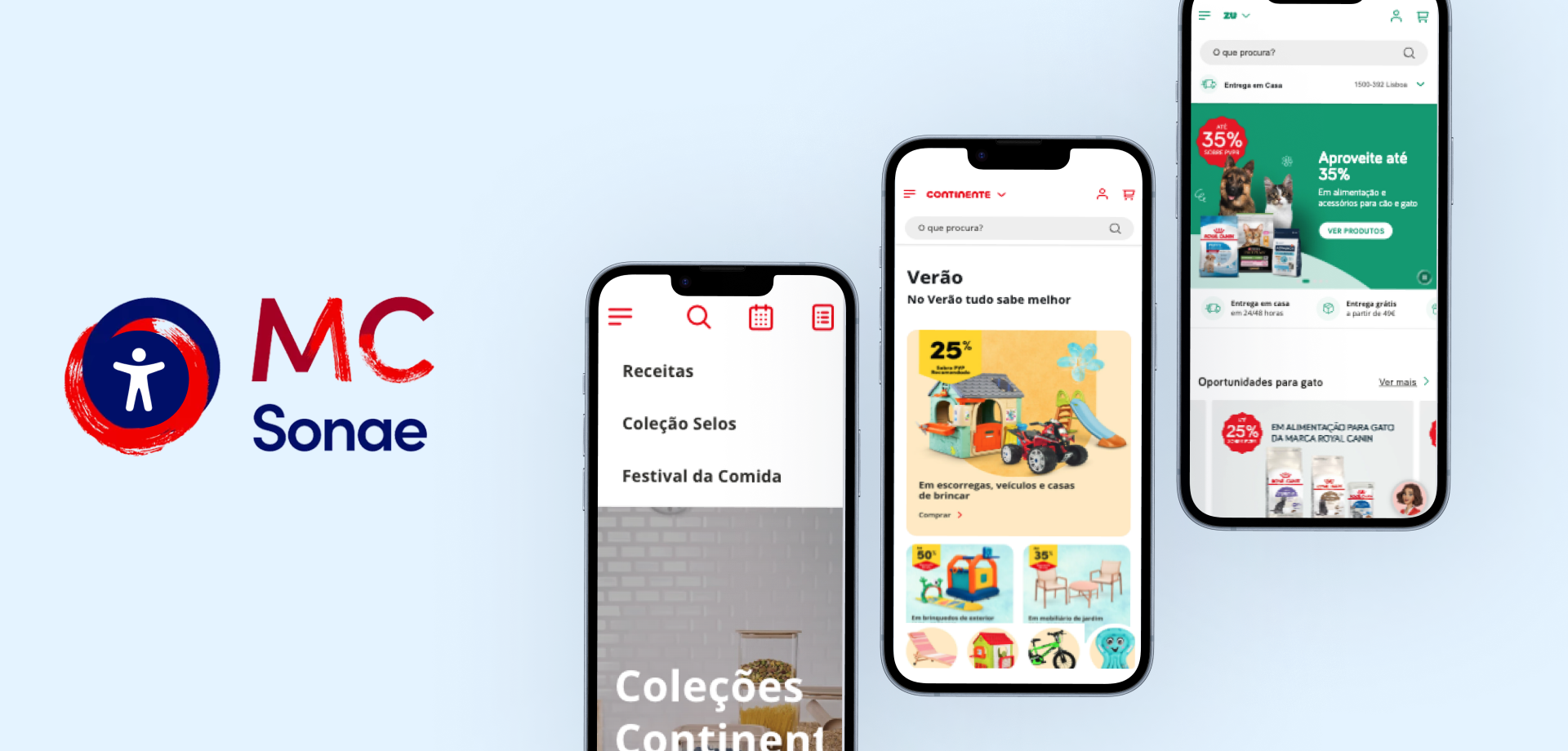
European Accessibility Act compliance of Continente, Zu and Feed websites
Summary
Conducted audits of three Sonae websites: Continente, Zu and Feed, using assistive technologies, and moderated usability testing with 6 users with disabilities to identify and resolve compliance gaps with the European Accessibility Act (EAA).
Product
Sonae is a leading retailer in Portugal, operating well-known brands such as Continente, ZU, and Continente Feed, and offering products and services through an extensive network of physical stores and fully integrated digital channels.
Date
2025
My role
Accessibility Lead and Researcher
Softwares
Voice Over, NVDA, Talkback, Figma, Notion, Power Point

The main issue
Inconsistent accessibility across key user journeys on the three Sonae websites. Many Sonae customers with disabilities faced barriers when browsing product categories, completing online purchase forms, or accessing essential content and store service information. These obstacles caused confusion, abandoned transactions, and risked non-compliance with key EAA accessibility requirements.

The goal
Make the Continente, ZU, and Feed websites easier to use for people with disabilities by identifying and fixing accessibility barriers. This will help all customers complete key tasks—such as creating and managing shopping lists, placing online grocery orders, checking promotions, and arranging home deliveries—without frustration, while ensuring the platforms comply with the European Accessibility Act.

The process
Audit
based on the European Accessibility Act requirements, which is based on EN 301 549 and WCAG.
Usability testing
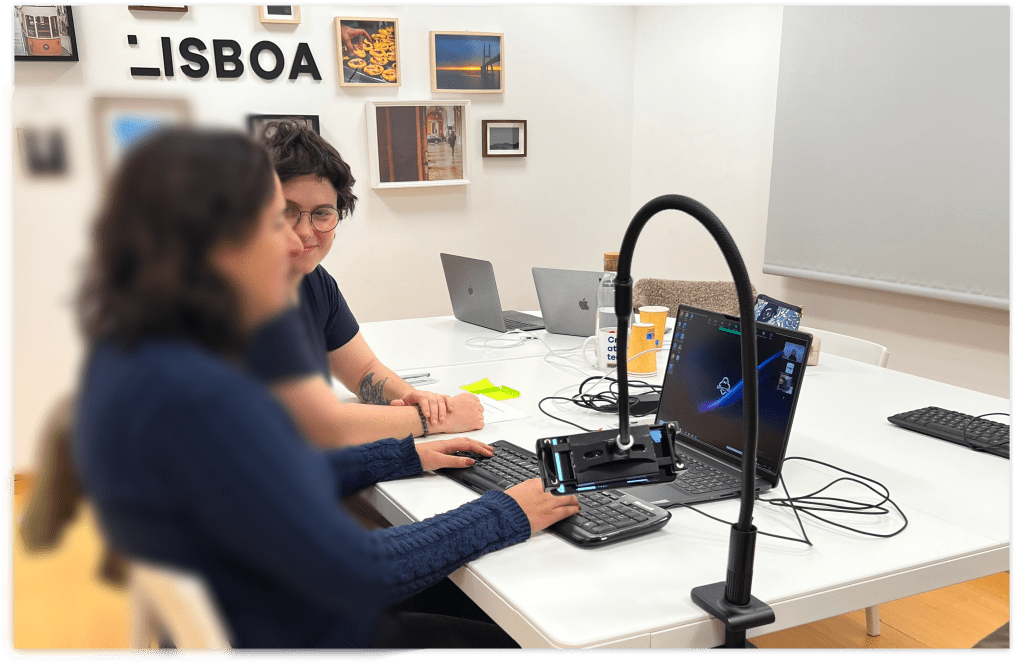
with 6 users with disabilities and other needs at Lab UX

What did I learn?
EAA compliance is not enough to make a website or app truly accessible
Meeting accessibility regulations like the EAA (European Accessibility Act) is just the starting point. True accessibility means designing interfaces that are usable and intuitive for all users, not just technically compliant. Compliance doesn’t guarantee a good experience.
Service dogs are part of the user experience, too
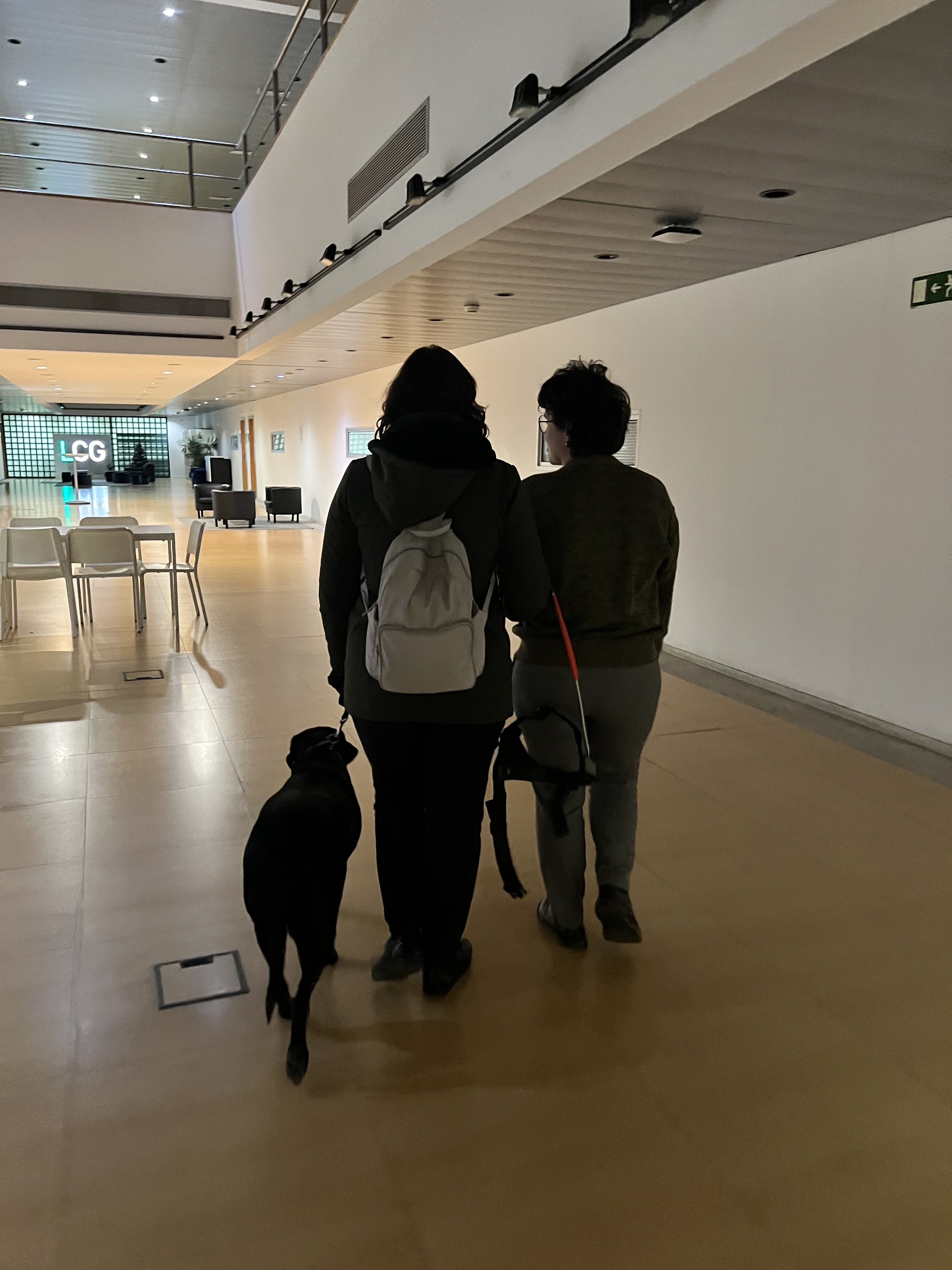
Accessibility goes beyond screens and interfaces. For some users with disabilities, service animals are essential companions during daily tasks. During usability testing, small details, like having a water cup ready for a service dog, can make the environment more inclusive, respectful, and comfortable for all participants.
It’s important to know how to operate the assistive technologies your users use
To effectively test with people with disabilities, I needed to understand the assistive technologies they rely on, like screen readers, magnifiers, voice navigation. This helped me follow their interactions, understand their feedback, and provide support if something goes wrong during testing. For example, when screenreader gets stuck and the user needs help to get back to a starting point for the next task.
Even users with the same disability can have very different experiences and navigation patterns
Accessibility isn’t one-size-fits-all. People use a wide range of assistive technologies and devices in different ways. Testing with diverse real users helps uncover variations in how your product is actually experienced.
 andreia duarte costa